
 By zynmag
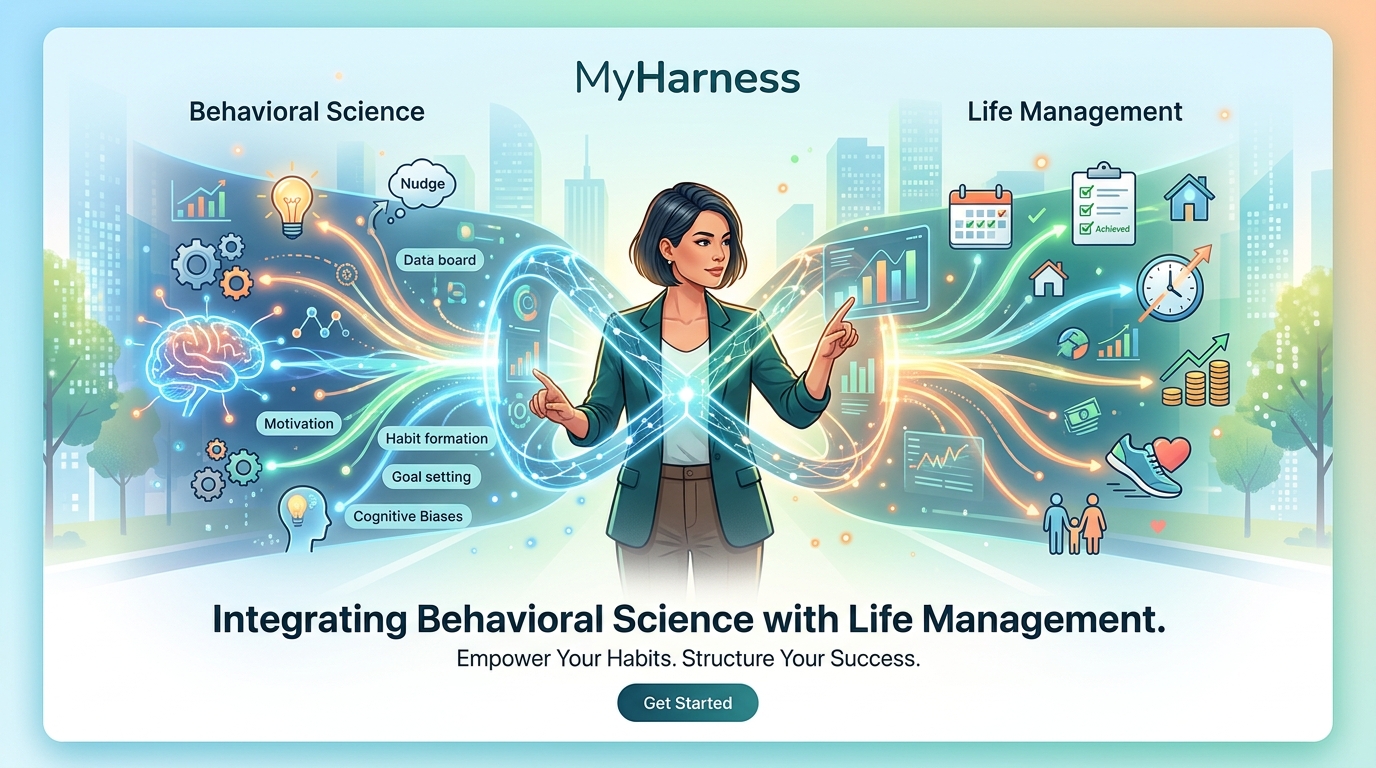
MyHarness represents a fresh approach to personal organization, merging behavioral science principles with practical daily planning tools. Unlike traditional productivity apps that simply track tasks, MyHarness draws on psychological research to help users understand why they procrastinate, what triggers their habits, and how small adjustments can produce meaningful change. As a result, the platform positions itself not as another to-do list but as a genuine life management system. This article explores how MyHarness works, what makes it distinct, and why behavioral science matters for anyone trying to build better routines.
What Is MyHarness?
At its core, MyHarness functions as a digital companion designed to bridge the gap between intention and action. Many people set goals with enthusiasm, yet they struggle to follow through once daily life gets busy. Consequently, MyHarness addresses this gap by combining goal-setting features with behavioral nudges rooted in established psychological frameworks. The platform doesn’t just ask users what they want to achieve; instead, it asks why previous attempts failed and builds strategies around those specific obstacles. Furthermore, MyHarness adapts its suggestions over time, learning from user behavior patterns rather than relying on generic advice.
The Behavioral Science Foundation
Behavioral science examines how humans actually make decisions, often revealing gaps between rational intentions and real-world actions. Therefore, MyHarness incorporates concepts like habit stacking, implementation intentions, and loss aversion into its core design. For instance, instead of simply reminding users to exercise, the platform might prompt them to schedule a workout immediately after an existing habit, such as brushing their teeth. This technique, known as habit stacking, leverages existing neural pathways to make new behaviors feel less effortful. Additionally, MyHarness applies principles of choice architecture, presenting options in ways that gently steer users toward better decisions without removing their autonomy.
Understanding Behavioral Triggers
One particularly useful feature involves trigger identification, which helps users recognize the specific cues that lead to unproductive patterns. Whether it’s stress, boredom, or a particular time of day, these triggers often operate below conscious awareness. However, MyHarness encourages users to log moments of distraction or procrastination, gradually building a personal map of their behavioral patterns. Over several weeks, this data reveals surprising insights that users might never have noticed on their own. As a result, they can proactively address triggers before those triggers derail their plans.
Life Management Beyond Simple To-Do Lists
Traditional planning tools typically focus on tasks and deadlines, treating users as if willpower alone determines success. In contrast, MyHarness recognizes that emotional state, energy levels, and environmental context all influence whether someone actually completes a task. Consequently, the platform integrates mood tracking alongside task management, helping users understand how their mental state affects productivity. For example, a user might notice that creative work flows more easily in the morning, while administrative tasks feel more manageable in the afternoon. Because of this awareness, MyHarness allows for smarter scheduling that aligns with natural energy rhythms rather than fighting against them.
Goal Setting with Psychological Nuance
Setting goals sounds straightforward, yet research consistently shows that vague intentions rarely translate into consistent action. Therefore, MyHarness guides users toward specific, measurable, and time-bound objectives while also addressing the psychological barriers that commonly derail progress. Rather than simply asking “What do you want to accomplish?”, the platform probes deeper, asking about past failures and potential obstacles. Subsequently, it helps users create contingency plans, sometimes called “if-then” plans, which prepare them for moments when motivation naturally dips. This approach reflects a broader shift in behavioral science toward planning for imperfection rather than assuming constant discipline.
Habit Formation and Long-Term Change
Building lasting habits requires more than sheer determination; it demands an understanding of how habits form and why they sometimes fail. MyHarness draws on the habit loop framework, which includes a cue, a routine, and a reward. By helping users identify each component, the platform makes it easier to redesign unhelpful habits or reinforce beneficial ones. Moreover, MyHarness emphasizes small, incremental changes rather than dramatic overhauls, since research suggests that gradual adjustments tend to stick better than ambitious resolutions. Consequently, users are encouraged to start with tiny, almost laughably small commitments, which then expand naturally as confidence builds.
The Role of Accountability
Accountability plays a significant role in behavior change, and MyHarness incorporates this insight through optional social features. Users can share specific goals with friends, family members, or accountability partners, creating gentle external pressure that supports internal motivation. Additionally, the platform sends progress summaries, allowing users to reflect on their trajectory without feeling overwhelmed by daily minutiae. Because accountability works differently for different people, MyHarness offers customizable levels of social visibility, ranging from completely private tracking to fully shared progress boards.
Data-Driven Personalization
Unlike static planning tools, MyHarness continuously refines its recommendations based on individual user data. Over time, the platform learns which strategies resonate with a particular user and which ones consistently get ignored. As a result, the suggestions become increasingly relevant, moving away from generic productivity tips toward genuinely personalized guidance. Furthermore, this data-driven approach means that MyHarness can identify patterns a user might miss, such as a tendency to abandon goals after initial enthusiasm fades. By surfacing these patterns, the platform helps users anticipate and counteract predictable pitfalls before they derail progress entirely.
Balancing Structure with Flexibility
While structure helps many people stay on track, rigid systems often collapse the moment life throws an unexpected curveball. Therefore, MyHarness builds in flexibility, allowing users to adjust plans without feeling like they’ve failed. This design choice reflects an important behavioral insight: perfectionism frequently undermines long-term consistency more than occasional lapses do. Instead of punishing missed days, the platform reframes setbacks as data points, encouraging users to analyze what happened and adjust accordingly. Consequently, this compassionate approach helps sustain motivation over months and years, rather than the initial burst of enthusiasm that often fizzles within weeks.
Emotional Wellbeing and Productivity
Productivity and emotional wellbeing are deeply intertwined, though many traditional tools ignore this connection entirely. MyHarness, however, treats emotional check-ins as a core part of its daily workflow, prompting users to reflect briefly on how they’re feeling. Subsequently, this information informs task suggestions, ensuring that demanding work isn’t scheduled during periods of emotional depletion. Additionally, the platform offers brief mindfulness prompts or breathing exercises when it detects patterns suggesting rising stress. While these features remain optional, many users find that addressing emotional state directly improves their overall follow-through on tasks and goals.
Reducing Decision Fatigue
Every decision a person makes throughout the day draws on limited mental resources, gradually leading to decision fatigue. MyHarness addresses this challenge by automating routine choices wherever possible, such as suggesting default schedules based on past behavior. As a result, users conserve mental energy for decisions that genuinely require careful thought. Moreover, the platform simplifies its interface deliberately, avoiding the overwhelming array of options that many productivity apps present. This minimalist approach, grounded in behavioral research on choice overload, helps users engage consistently without feeling exhausted by the tool itself.
Who Benefits Most from MyHarness?
While anyone seeking better life management could find value in MyHarness, certain groups may benefit particularly strongly. Individuals who have tried numerous productivity systems without lasting success often appreciate the platform’s focus on underlying behavior rather than surface-level task management. Similarly, people managing chronic stress or burnout may find the emotional wellbeing features especially relevant to their daily struggles. Students juggling academic deadlines alongside personal responsibilities often benefit from the habit-stacking and accountability tools as well. Ultimately, though, MyHarness appeals broadly to anyone curious about the psychological mechanisms driving their own behavior.
Getting Started with MyHarness
New users typically begin by completing an initial assessment, which helps the platform understand existing habits, goals, and past challenges. Afterward, MyHarness generates a personalized starting point, suggesting small, achievable actions rather than overwhelming users with extensive planning demands. Gradually, as users engage with daily prompts and tracking features, the system refines its understanding and offers increasingly tailored guidance. Because the onboarding process emphasizes gradual engagement, users rarely feel pressured to overhaul their entire routine immediately. Instead, they build momentum slowly, which behavioral science suggests produces more durable change than dramatic, all-at-once transformations.
The Future of Behavioral Science in Personal Tools
As behavioral science continues evolving, tools like MyHarness represent a broader trend toward psychologically informed technology design. Increasingly, developers recognize that sustainable behavior change requires more than reminders and checklists; it requires genuine understanding of human psychology. Consequently, future iterations of platforms like MyHarness may incorporate even more sophisticated personalization, potentially drawing on emerging research in neuroscience and decision-making. Meanwhile, users benefit today from tools that treat them as complex individuals rather than simple task-completion machines. This shift, though gradual, marks a meaningful evolution in how technology supports personal growth and daily functioning.
Conclusion
MyHarness distinguishes itself by weaving behavioral science directly into everyday life management, rather than treating productivity as a matter of willpower alone. Through features like trigger identification, habit stacking, and emotional check-ins, the platform addresses the psychological realities that often undermine traditional planning tools. Additionally, its data-driven personalization ensures that guidance becomes more relevant over time, adapting to each user’s unique patterns and challenges. Ultimately, MyHarness offers a compassionate, science-backed alternative for anyone tired of productivity systems that ignore the complexity of human behavior. For those ready to understand themselves more deeply while building lasting habits, MyHarness provides a thoughtful starting point.