
 By zynmag
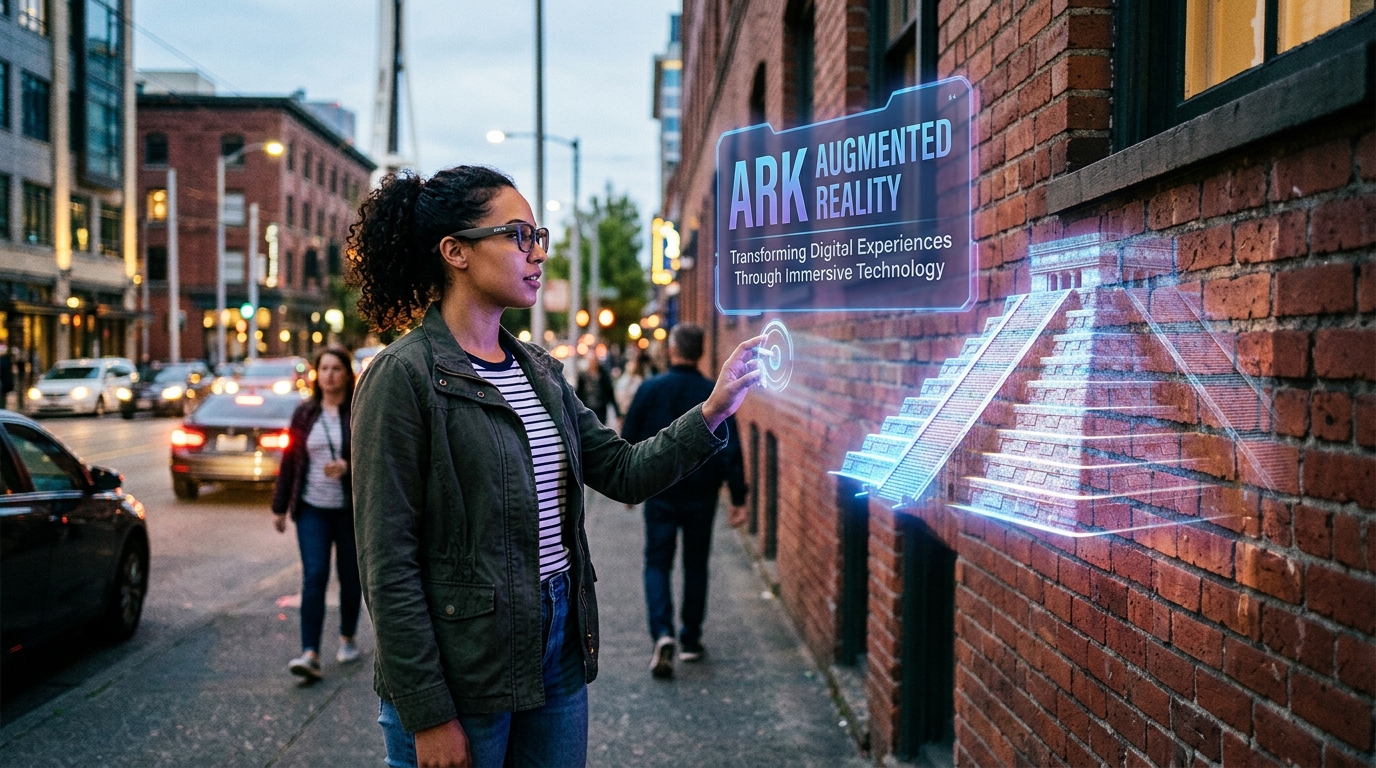
Technology continues reshaping how people interact with digital content in their everyday surroundings. ARK Augmented Reality stands at the center of this shift, blending virtual elements with physical spaces. Consequently, users experience information, entertainment, and design in ways previously impossible without specialized equipment. Furthermore, this platform empowers developers to build immersive applications across gaming, retail, and education sectors. As adoption grows worldwide, understanding this technology becomes essential for businesses and everyday consumers alike.
What Is ARK Augmented Reality?
This platform refers to a technology framework that overlays digital content onto real-world environments. Specifically, it uses cameras, sensors, and software to detect surfaces and track movement accurately. Additionally, it renders three-dimensional objects that appear anchored within a user’s actual surroundings. Because this system processes data in real time, interactions feel natural and remarkably responsive. Therefore, developers rely on it to create experiences that blend seamlessly with everyday life. In essence, this framework transforms ordinary smartphones and headsets into powerful windows for digital exploration.
How This Technology Works
Understanding the mechanics behind this system helps clarify why it feels so convincing to users. First, the device’s camera captures a continuous stream of the surrounding physical environment. Meanwhile, motion sensors track the device’s position and orientation with impressive precision. Subsequently, software algorithms map flat surfaces like floors, tables, and walls automatically. Once mapping completes, digital objects get placed and anchored within that mapped space convincingly. As a result, virtual elements appear to interact naturally with real-world lighting and physical obstacles.
Surface Detection and Spatial Mapping
Surface detection forms the foundational layer of any convincing augmented experience today. Cameras and depth sensors work together to identify flat, stable surfaces nearby instantly. Afterward, the system creates an invisible mesh representing the room’s physical geometry accurately. This mesh allows virtual objects to rest naturally on tables, floors, or countertops. Without accurate spatial mapping, digital elements would float unnaturally or clip through solid surfaces. Therefore, this detection process remains critical to achieving believable, immersive augmented reality experiences.
Real-Time Tracking and Rendering
Once spatial mapping completes, the system must track movement continuously and render content instantly. Specifically, algorithms recalculate the device’s position multiple times per second during active use. Meanwhile, rendering engines adjust lighting, shadows, and perspective to match the physical environment. Consequently, virtual objects appear stable even as users walk around or tilt their devices. This combination of tracking and rendering creates the illusion that digital content truly exists physically. Ultimately, seamless real-time performance separates convincing augmented experiences from clunky, unconvincing ones.
Key Features That Set This Platform Apart
Several distinctive features distinguish this technology from earlier, more limited augmented reality tools. Persistent anchoring allows virtual objects to remain fixed in place across multiple sessions. Additionally, multiplayer support enables several users to view and interact with shared digital content simultaneously. Lighting estimation adjusts virtual object shadows to match real-world illumination conditions automatically. Furthermore, occlusion handling ensures digital objects hide correctly behind real physical obstacles. Together, these features create experiences that feel remarkably polished and genuinely believable to users.
Persistent Anchoring
Persistent anchoring lets digital content stay exactly where users originally placed it, even after closing an app. For instance, a virtual sculpture placed in a living room remains there during future sessions. This continuity proves essential for applications involving interior design or long-term collaborative projects. Moreover, persistent anchoring enhances trust, since users know their digital placements will not disappear randomly. Consequently, developers increasingly build applications assuming users expect this kind of spatial consistency.
Multiplayer and Shared Experiences
Shared augmented experiences allow multiple people to view identical virtual content from different angles simultaneously. This feature proves particularly valuable for collaborative design reviews or multiplayer gaming applications. Meanwhile, synchronized tracking ensures every participant sees digital objects in the same physical location. As a result, teams can discuss and interact with three-dimensional prototypes together in person. This collaborative capability represents a significant leap beyond single-user augmented reality experiences.
Industries Benefiting from ARK Augmented Reality
Numerous industries have already begun integrating this technology into their core operations and workflows. Retail businesses use it to let customers preview furniture or clothing before purchasing. Meanwhile, educators leverage immersive content to teach complex subjects through interactive, visual demonstrations. Healthcare providers apply this technology for surgical planning and detailed anatomical training simulations. Additionally, manufacturing companies use augmented overlays to guide workers through complex assembly procedures. Clearly, the practical applications extend far beyond entertainment and casual consumer experiences.
Retail and E-Commerce Applications
Online shopping traditionally struggled with helping customers visualize products within their own homes accurately. However, augmented reality solves this problem by letting customers preview items virtually beforehand. For example, shoppers can see how a couch looks in their living room before buying. Consequently, this capability reduces return rates and increases customer confidence during online purchases. Retailers report higher conversion rates when offering these interactive, try-before-you-buy digital experiences.
Education and Training
Traditional textbooks often struggle to convey complex three-dimensional concepts effectively to students. Augmented reality addresses this limitation by bringing diagrams and models to life visually. For instance, students can examine a virtual human heart from every possible angle. Similarly, history students might view historical landmarks reconstructed digitally within their own classrooms. This interactive approach improves retention and engagement compared to purely text-based learning methods. Consequently, schools and universities increasingly invest in augmented reality curriculum tools.
Healthcare and Medical Training
Medical professionals require precise, hands-on practice before performing complex procedures on real patients. Augmented reality allows trainees to practice surgical techniques using realistic, three-dimensional virtual simulations. Additionally, surgeons use augmented overlays during actual operations to visualize critical anatomical structures. This real-time guidance improves precision and potentially reduces complications during delicate medical procedures. As adoption grows, medical training programs increasingly incorporate augmented reality into standard curriculum requirements.
Development Tools and Technical Requirements
Building applications with this technology requires specific tools, frameworks, and hardware considerations. Developers typically use dedicated software development kits designed specifically for augmented reality creation. Additionally, compatible devices need adequate processing power, quality cameras, and reliable motion sensors. Meanwhile, programming languages like Swift, Java, and C# commonly support these development frameworks. Understanding these technical requirements helps developers choose the right tools for their specific projects.
Software Development Kits
Software development kits provide the foundational building blocks developers need to create augmented experiences. These kits typically include libraries for surface detection, object tracking, and rendering. Furthermore, many kits offer pre-built templates that accelerate development timelines significantly for teams. Documentation and community support also play crucial roles in successful application development. Consequently, choosing a well-supported development kit often determines a project’s overall success and timeline.
Hardware Compatibility Considerations
Not every device supports advanced augmented reality features equally well across different models. Generally, newer smartphones with powerful processors and quality cameras perform significantly better. Additionally, dedicated headsets offer more immersive experiences compared to standard handheld devices. Developers must therefore consider their target audience’s typical hardware capabilities during the planning phase. Otherwise, applications might perform poorly or exclude users with older, less capable devices.
Challenges Facing Augmented Reality Adoption
Despite tremendous progress, this technology still faces several meaningful challenges limiting widespread adoption. Battery consumption remains a persistent concern, since continuous camera and sensor use drains power quickly. Additionally, some users experience discomfort or motion sickness during extended augmented reality sessions. Privacy concerns also arise, since these applications constantly capture and analyze surrounding environments. Furthermore, inconsistent hardware capabilities across devices create fragmented user experiences industry-wide. Addressing these challenges remains essential for broader, more sustainable technology adoption.
Battery Life and Performance Constraints
Continuous camera usage, sensor tracking, and rendering place significant demands on device batteries. Consequently, users often notice their devices draining faster during extended augmented reality sessions. Manufacturers continue working to optimize hardware efficiency without sacrificing overall performance quality. Meanwhile, developers must balance visual fidelity against processing demands to maintain reasonable battery life. This ongoing challenge influences how ambitious developers can be when designing new applications.
Privacy and Data Security Concerns
Since these applications constantly scan physical environments, privacy naturally becomes a significant concern. Cameras capture detailed information about rooms, objects, and sometimes other people nearby. Therefore, companies must implement robust data protection measures to maintain user trust effectively. Additionally, clear privacy policies help users understand exactly what data gets collected and stored. Without addressing these concerns transparently, broader public adoption may face continued resistance and skepticism.
The Future Outlook for ARK Augmented Reality
Looking ahead, this technology will likely become increasingly integrated into everyday digital experiences. Advances in artificial intelligence will improve object recognition and environmental understanding significantly. Meanwhile, lighter, more comfortable headsets may eventually replace handheld smartphone-based applications entirely. Additionally, faster network speeds will enable more complex, cloud-rendered augmented content in real time. As these improvements continue, augmented reality will likely become as common as touchscreen interfaces today. Ultimately, this evolution promises richer, more natural interactions between digital content and physical reality.
Conclusion
ARK Augmented Reality represents a meaningful step forward in how people experience digital content daily. By blending virtual elements seamlessly with physical environments, it opens new creative and practical possibilities. From retail and education to healthcare and entertainment, its applications continue expanding rapidly. However, challenges around battery life, privacy, and hardware fragmentation still require thoughtful, ongoing solutions. As developers refine tools and hardware improves, adoption will likely accelerate across nearly every industry. Ultimately, this technology’s true potential lies in making digital experiences feel genuinely part of our physical world.