
 By zynmag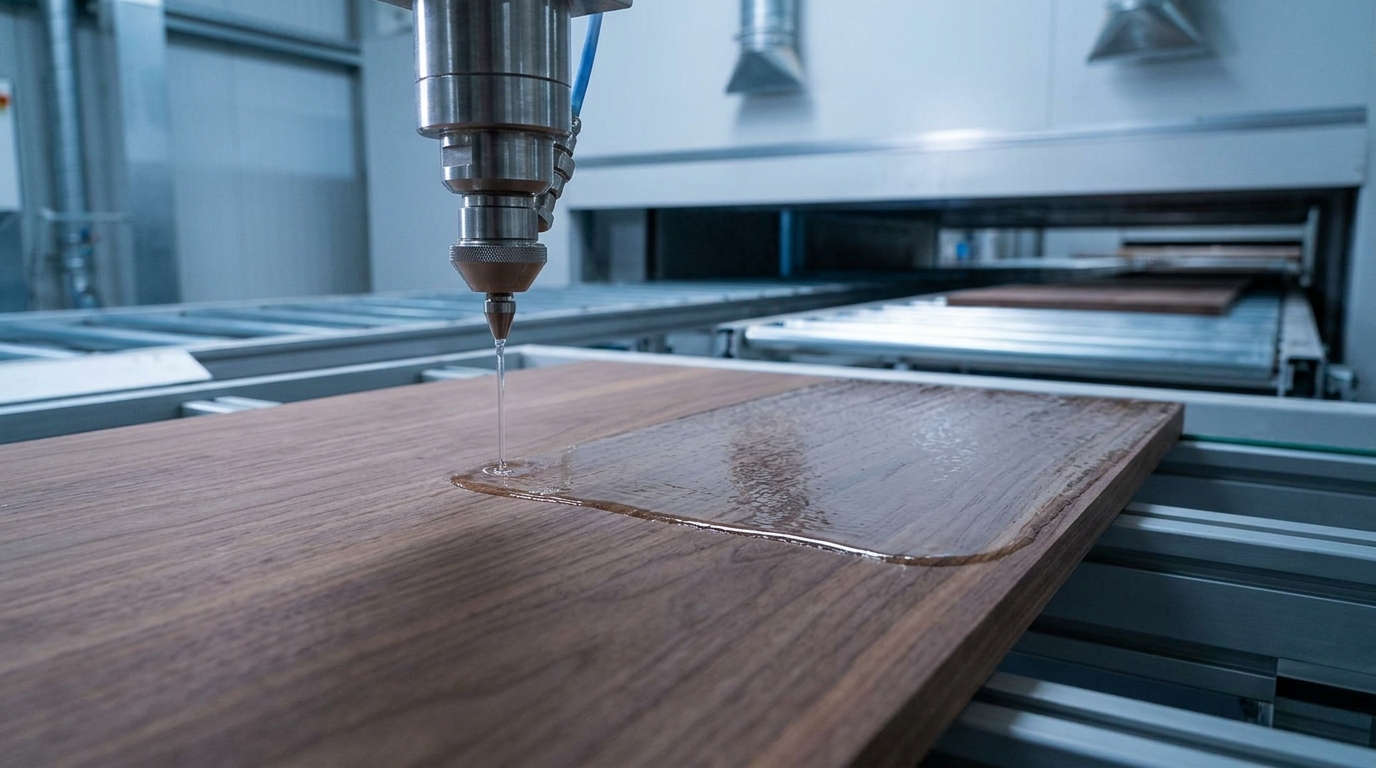
Introduction to a Revolutionary Coating Solution
Modern industries constantly seek faster, stronger, and more environmentally responsible finishing solutions. Therefore, professionals across woodworking, furniture manufacturing, and industrial production have turned to innovative coating technologies. One name that stands out in this space is Uvlack. So, what is Uvlack exactly, and why do so many finishing experts prefer it over traditional options?
Uvlack is a high-performance UV-curable lacquer that hardens almost instantly when exposed to ultraviolet light. Consequently, it delivers exceptional durability, clarity, and surface protection across a wide range of materials. Furthermore, its unique chemical composition makes it a standout choice for both industrial and commercial applications. This article explores everything you need to know about this remarkable product, including its core benefits and practical applications.
Understanding UV-Curable Lacquer Technology
How UV Curing Actually Works
UV-curable lacquer relies on a photochemical reaction to harden its coating instantly. When manufacturers apply the lacquer to a surface, it remains in liquid form initially. However, the moment UV light hits the coated surface, photoinitiators within the formula activate a rapid polymerization process. As a result, the liquid coating transforms into a hard, cross-linked film within seconds.
This process differs fundamentally from conventional solvent-based or water-based lacquers. Traditional coatings require evaporation of solvents or water to achieve hardness. In contrast, UV-curable coatings use light energy to trigger a chemical chain reaction instead. Therefore, the curing process becomes far more predictable, consistent, and controllable in production environments.
The Chemistry Behind Uvlack
Uvlack contains three primary chemical components that work together seamlessly. First, it includes oligomers, which form the backbone of the final cured film. Second, it contains monomers that adjust viscosity and influence the flexibility of the coating. Third, photoinitiators absorb UV energy and initiate the polymerization reaction efficiently.
Additionally, Uvlack formulations often include additives that enhance specific performance characteristics. For instance, UV stabilizers protect the cured film from long-term UV degradation outdoors. Furthermore, flow agents ensure the coating spreads evenly across complex or detailed surfaces. Together, these components create a highly engineered product that delivers consistently excellent results.
Key Benefits of UV-Curable Lacquer
Exceptionally Fast Curing Speed
One of the most compelling advantages of Uvlack is its remarkably fast curing time. Unlike solvent-based lacquers that take hours or even days to cure fully, UV-curable lacquer hardens within seconds. Consequently, manufacturers can significantly increase production throughput and reduce waiting time between coating stages. Therefore, businesses save both time and money across their entire finishing operations.
Moreover, faster curing means that coated products spend less time in vulnerable, uncured states on production lines. This reduction in open-time exposure minimizes the risk of dust contamination and surface defects. As a result, quality control becomes easier and far more consistent throughout the manufacturing process.
Superior Surface Hardness and Durability
Uvlack produces an exceptionally hard surface film after UV curing completes. This hardness makes coated surfaces highly resistant to scratching, abrasion, and everyday mechanical wear. Therefore, products finished with this lacquer maintain their appearance and integrity far longer than conventionally coated items do.
In addition, the cross-linked polymer structure created during UV curing provides outstanding chemical resistance. Household cleaners, solvents, and common chemicals fail to penetrate or damage the cured film effectively. Consequently, furniture, cabinetry, and flooring finished with Uvlack withstand years of heavy daily use with minimal visible wear.
Outstanding Optical Clarity and Gloss
Many coating professionals choose Uvlack specifically because of its brilliant optical clarity after curing. The lacquer produces a glass-like finish that enhances the natural beauty of wood grain and other substrate textures. Furthermore, it maintains this clarity over time without yellowing, hazing, or losing its transparency under normal conditions.
Additionally, Uvlack offers excellent gloss retention throughout the product’s entire service life. The cured surface reflects light evenly and consistently, giving finished products a premium and professional appearance. Therefore, high-end furniture makers and luxury product manufacturers frequently choose this lacquer for their most demanding finishing applications.
Low VOC Emissions and Environmental Benefits
Traditional solvent-based lacquers release large amounts of volatile organic compounds during application and curing processes. These emissions contribute to air pollution, create workplace health hazards, and complicate regulatory compliance significantly. In contrast, Uvlack contains little to no solvents, which drastically reduces VOC emissions throughout the entire production cycle.
Consequently, manufacturers using Uvlack create safer working environments for their employees and surrounding communities. Furthermore, the reduced emissions help companies meet increasingly strict environmental regulations without investing in expensive ventilation infrastructure. Therefore, switching to UV-curable lacquer often represents both an environmental and a financial improvement simultaneously.
Moreover, UV curing uses energy far more efficiently than conventional thermal drying ovens require. Since UV lamps only operate during the brief curing moment, they consume significantly less electricity overall. As a result, manufacturers reduce their carbon footprint and lower energy costs across their finishing operations meaningfully.
Minimal Material Waste and Higher Transfer Efficiency
Uvlack offers an extremely high transfer efficiency during the application process. Nearly all the applied material ends up on the substrate surface rather than evaporating into the atmosphere as waste. Therefore, manufacturers use less product to achieve the same or even better coverage results compared to traditional lacquers.
Additionally, the absence of solvents means that there is no material loss during the curing stage itself. Solvent-based systems lose a significant percentage of their applied volume through evaporation before hardening occurs. In contrast, UV-curable lacquer maintains its full volume after curing, resulting in a thicker and more uniform film. Consequently, manufacturers achieve excellent coverage with fewer coats and less total product consumption.
Excellent Adhesion Across Multiple Substrates
Uvlack bonds effectively to a wide variety of substrate materials used across different industries. Wood, MDF, particleboard, metal, plastics, and composites all accept this lacquer with outstanding adhesion results. Therefore, manufacturers working with diverse material combinations can rely on a single consistent coating product throughout their production lines.
Furthermore, proper surface preparation enhances adhesion even further and ensures long-lasting coating performance. Sanding, cleaning, and priming substrates before application allows Uvlack to bond at the molecular level effectively. As a result, the cured film resists peeling, delamination, and adhesion failure even under demanding environmental conditions.
Practical Applications of Uvlack
Furniture and Cabinetry Finishing
The furniture industry represents one of the largest and most enthusiastic users of UV-curable lacquer technology. Cabinet makers, furniture manufacturers, and interior component producers all rely on fast-curing coatings to meet demanding production schedules. Uvlack allows these manufacturers to coat, cure, and stack finished panels within minutes rather than hours.
Moreover, the superior scratch resistance makes it ideal for tabletops, countertops, and kitchen cabinet doors that face daily abuse. Homeowners and commercial clients both appreciate surfaces that maintain their original appearance despite heavy use. Therefore, specifying Uvlack-finished products has become a strong selling point for quality-conscious furniture brands worldwide.
Flooring and Parquet Applications
Hardwood flooring and parquet manufacturers have adopted UV-curable lacquer extensively across their production facilities. Flooring products require extreme durability because they endure constant foot traffic, furniture movement, and occasional impact damage. Consequently, the exceptional hardness and abrasion resistance of Uvlack make it a natural fit for this demanding application.
Additionally, the high-gloss or satin finishes available in Uvlack formulations allow flooring manufacturers to satisfy diverse aesthetic preferences. Some customers prefer a shiny, reflective finish while others favor a more subtle and natural-looking surface. Therefore, UV-curable lacquer technology gives manufacturers the flexibility to serve a broad spectrum of market demands efficiently.
Automotive and Industrial Components
The automotive industry uses UV-curable coatings extensively on interior trim components, instrument panels, and decorative elements. These parts demand both visual quality and resistance to heat, humidity, and chemical exposure simultaneously. Uvlack delivers all these performance attributes in a single efficient coating process.
Furthermore, industrial component manufacturers use UV-curable lacquer to protect metal and plastic parts from corrosion and surface damage. Electronics housings, medical device components, and consumer product casings all benefit from this advanced coating technology. As a result, UV-curable lacquer has established itself as an essential tool across a wide range of manufacturing sectors globally.
Printing and Graphic Arts
The printing industry applies UV-curable lacquer as an overprint varnish to protect printed materials and enhance their visual appeal. Brochures, book covers, packaging, and marketing materials all benefit from a UV lacquer topcoat. Therefore, printers use Uvlack to add gloss, protection, and a premium tactile quality to their finished printed pieces.
Moreover, spot UV coating using UV-curable lacquer creates dramatic visual contrasts on printed surfaces. Designers apply high-gloss UV lacquer selectively over matte printed areas to create eye-catching packaging designs. Consequently, this technique has become enormously popular in luxury packaging, cosmetics branding, and premium consumer goods marketing.
Application Methods and Equipment Requirements
Roller Coating for Flat Panels
Roller coating represents the most common and efficient application method for flat substrates in production environments. The coating system applies Uvlack through a series of rollers that transfer a precise amount of lacquer to the panel surface. Subsequently, conveyor systems transport coated panels directly through UV lamp banks for immediate curing.
This method achieves extremely consistent coating thickness and minimizes material waste effectively. Furthermore, roller coating systems can process large volumes of panels at high speeds throughout the production day. Therefore, large-scale furniture and flooring manufacturers favor this application method for its productivity and cost efficiency.
Spray Application for Complex Shapes
Three-dimensional objects and components with complex geometries require spray application rather than roller coating systems. Spray guns, whether manual or automated, apply Uvlack evenly over curved, contoured, or detailed surfaces. However, spray application of UV-curable lacquer requires careful technique to avoid runs, sags, or uneven coating thickness.
After spray application, manufacturers use UV flood lamps, conveyor UV systems, or robotic UV curing units to cure complex parts. Additionally, some manufacturers use nitrogen-inerted UV curing chambers to achieve complete surface cure on highly pigmented or dark-colored coatings. As a result, even the most challenging geometries receive consistent and thorough UV curing treatment.
Comparing Uvlack to Conventional Lacquers
Speed and Productivity
Traditional lacquers require substantial drying time between coats and before handling finished products becomes safe. Workers must wait hours for solvent-based coatings to dry sufficiently before sanding, top-coating, or packaging products. In contrast, Uvlack cures in seconds, which transforms the entire pace and efficiency of the production workflow.
Consequently, manufacturers can run multiple coating passes within a single work shift rather than spreading them across multiple days. This dramatic productivity improvement directly reduces labor costs and increases the total output capacity of existing finishing lines. Therefore, many manufacturers recover their investment in UV curing equipment very quickly through improved production efficiency.
Finish Quality and Consistency
Conventional lacquers are sensitive to temperature, humidity, and air quality during the drying and curing process. These environmental variables create inconsistency in gloss levels, surface texture, and film build across production batches. However, UV curing eliminates most of these variables because the photochemical reaction proceeds independently of ambient conditions.
Furthermore, UV-curable lacquer delivers more consistent film build and gloss uniformity across large batches of components. Quality control teams find it far easier to maintain tight specifications when coating variables remain predictable and controllable. As a result, manufacturers report fewer rejections, less rework, and higher overall product quality with UV-curable systems.
Important Considerations Before Using UV-Curable Lacquer
Equipment Investment Requirements
Transitioning to Uvlack requires purchasing UV curing lamps and compatible application equipment initially. This upfront investment can be significant for small manufacturers or workshops with limited capital available. However, the long-term savings in material consumption, energy use, and labor costs typically justify the initial expenditure substantially.
Substrate Compatibility Testing
Not every substrate responds identically to UV-curable lacquer under all application conditions. Therefore, manufacturers should always conduct thorough adhesion and compatibility testing before committing to full production runs. Some plastics or pre-finished surfaces may require specific primers or surface treatments to achieve satisfactory bonding results consistently.
Conclusion
UV-curable lacquer technology has genuinely transformed the surface finishing industry across multiple sectors. Uvlack delivers an impressive combination of speed, hardness, clarity, environmental responsibility, and coating consistency. Therefore, manufacturers who adopt this technology gain a meaningful competitive advantage in quality, productivity, and sustainability simultaneously. Whether professionals work in furniture, flooring, automotive, or printing industries, this advanced coating solution offers compelling and practical benefits for modern production environments.